


One out of every five hospital patient records may contain a duplicate or incorrect identity. In remote care, identity uncertainty can expose records, disrupt clinical decisions, and increase fraud risk. A well-designed proofing workflow gives telehealth teams higher confidence in who is requesting care without forcing every patient through the same level of review.
Patient identity proofing is the process of establishing that a remote user is the person they claim to be before granting access to care, records, prescriptions, or other sensitive workflows. It can combine authoritative data checks, government ID validation, selfie-to-ID comparison, and liveness detection. The right combination depends on the risk of the interaction. For telehealth leaders, the goal is not maximum friction at every step. It is reliable assurance at the moments where an identity error would create the greatest clinical, privacy, or fraud exposure.
Every telehealth provider needs a clear strategy for adding these security steps without slowing down the patient experience. Understanding where patient identity proofing belongs in telehealth is the best place to begin.
Where patient identity proofing belongs in telehealth
Telehealth teams need defensible identity assurance at the points where an identity error could expose records, distort a clinical decision, or enable fraud. Effective patient identity proofing supports that assurance while preserving access for legitimate patients. One peer-reviewed study found duplicate records in roughly 22 percent of cases, illustrating why reliable patient identity management matters across the care journey.
Onboarding and account setup
New-patient enrollment is the first opportunity to establish a trusted identity record. Verifying an identity at this stage can reduce fraudulent account creation and prevent inaccurate demographic data from propagating into downstream systems. A Know Your Patient (KYP) workflow can validate an authoritative identity document and connect the verified person to the account before sensitive services are available.
Safe sign-ups are vital for patient identity proofing for telehealth systems. Most fraud happens at this stage. By using face scans and AI, you can verify a person in under 10 seconds. This makes the flow smooth for real patients while keeping fakes out. You save time and money by stopping fraud before it starts. It also supports the identity controls a healthcare organization selects as part of its broader privacy and security program.
High-risk events and prescriptions
A check should also happen before major medical acts. These high-risk moments include the start of a visit or ordering meds. Doctors need to be sure the person they see is the one on the chart. This is especially important for controlled-substance prescribing and other higher-risk clinical decisions. Checking a patient before the visit adds an identity assurance layer that supports the clinician's review and helps reduce the risk of care being delivered under the wrong record.
Intake and booking are also appropriate checkpoints for risk-based re-verification. A fresh selfie or ID scan can help detect account sharing and identity misuse before a clinician begins the encounter. The workflow should reserve higher-assurance checks for higher-risk interactions, allowing clinical staff to focus on care rather than resolving identity discrepancies during the visit.
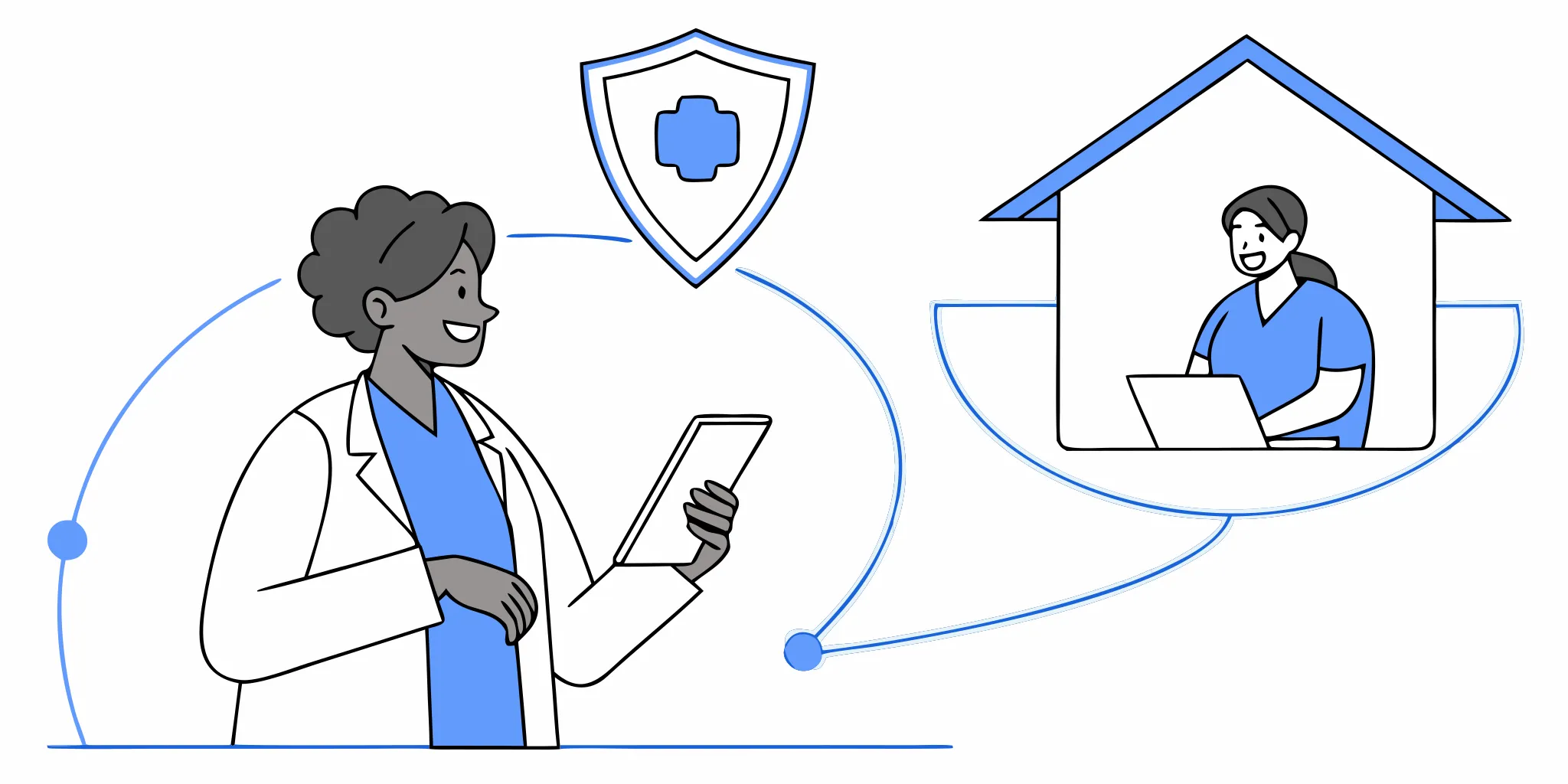
Account recovery and re-verification
Account recovery is a high-risk workflow because an attacker may control a compromised email address or phone number. Requiring a fresh identity check, rather than relying only on a possession factor, can provide stronger assurance before restoring access to protected health information.
Re-verification extends that assurance beyond enrollment. Teams should define event-based triggers, such as unusual device activity, account-detail changes, or access to a sensitive service, rather than applying arbitrary checks to every visit. This approach supports durable trust while limiting unnecessary patient friction.
What fraud and friction risks should teams plan for?
Healthcare teams must manage a complex mix of fraud and user experience hurdles when they set up patient identity proofing for telehealth. Bad actors use stolen data and fake IDs to gain access to services or prescriptions. At the same time, real patients may struggle with technical steps, leading them to drop out of the onboarding process. Balancing these two needs is the main goal for any identity program.
Common types of medical identity fraud
Identity theft in healthcare often involves stolen personal data used to get medical care or file false claims. Fraudsters may use synthetic identities, which blend real and fake data to create new personas. They also target accounts through takeovers to access private health records. These risks make it vital to use online identity verification that can spot deepfakes and doctored ID photos.
The rise of remote care has made these threats more common. Since the start of the COVID-19 pandemic, telehealth has become a key part of the health system, which has led to a greater need for strong identity management. Without proper checks, teams may face rising costs from fraud and risks to patient safety. Effective tools must check that the person on the screen matches the ID they provide in real time.
Friction and patient abandonment
Security controls that are slow, repetitive, or difficult to complete can interrupt access to care. Patients using older devices, limited bandwidth, or assistive technology may encounter disproportionate failure rates. Teams should monitor completion time, retry rate, abandonment, and device-specific performance to identify avoidable barriers.
Accessibility and delegated-care scenarios also require deliberate workflow design. Some patients need support from a caregiver or family member, and that legitimate assistance should not automatically trigger a fraud decision. Clear exception handling and human review help reduce false rejections without weakening the underlying assurance standard.
How do patient verification methods compare?
Patient identity proofing methods provide different levels of assurance, evidence, and user effort. The appropriate method depends on the potential impact of an identity error, the signals already available, and the accessibility needs of the patient population. Most mature programs combine methods instead of treating any single signal as conclusive.
Database and records checks
This method looks at public and private records to find a match. It checks things like names, birthdays, and home addresses. It is very fast and does not need the patient to show a real ID card. This makes it easy for patients to use from home. But it might not stop a person who knows a patient's info from lying. Since it does not prove the person is who they say they are, it is best for low-risk tasks.
Most groups use this as a first step to find a person in a system. It helps reduce errors when creating new files. This is key because one study showed that about 22% of medical records are copies. Using data checks early can help keep patient files clean and accurate.
ID and selfie liveness
ID and selfie verification can provide higher assurance by checking document authenticity, comparing the portrait with a live selfie, and evaluating liveness signals. Vouched reports identity verification in under 10 seconds with 99% accuracy. This method is well suited to higher-risk patient identity proofing for telehealth workflows.
Liveness checks are vital. They ensure the person is real and present. This stops bad actors from using a photo or a video of someone else. It is a top choice for new patient sign-ups where trust must be built from the start. It can also support documented security and assurance practices, depending on the organization's implementation and vendor controls.
Phone and email checks
These checks send a short code to a phone number or email address. The patient must enter the code to prove they own that account. This shows the person has the device or account that is on file. It is a quick way to check a person who is coming back for more care. It helps make low-cost telehealth care delivery more secure and solid.
While this method is easy, it is not the most secure on its own. A phone can be lost or an email can be hacked. This is why many clinics use it along with other checks. It adds a layer of safety without making the process too slow for the patient.
Biometrics for repeat visits
Biometric matching can provide a strong repeat-visit signal by comparing a live face or fingerprint with a previously enrolled reference. It can reduce reliance on stolen passwords for access to sensitive records. Teams should still evaluate spoof resistance, matching performance, consent, and fallback requirements.
Biometrics can also reduce repeat-visit friction by limiting reliance on passwords or repeated document capture. They should be implemented with clear consent, privacy controls, fallback paths, and a documented understanding of where biometric matching fits within the organization's broader assurance model.
Discuss your telehealth identity workflow with Vouched
| Method | Speed | Security Level | Best Use Case |
|---|---|---|---|
| Database Match | Very Fast | Low | Basic record check |
| ID + Selfie | Fast | High | New patient sign-up |
| Phone/Email Code | Fast | Medium | Quick log-in |
| Biometrics | Very Fast | Very High | Repeat visits |
How to design a risk-based identity proofing workflow
A risk-based patient identity proofing program matches the strength of each check to the potential impact of an identity error. Lower-risk interactions can use lower-friction signals, while access to sensitive records, account recovery, or other high-risk events can trigger stronger evidence. This tiered model supports fraud control and patient access without requiring manual review for every interaction.
Assessing patient risk levels
Not every patient interaction requires the same assurance level. A routine follow-up may require less evidence than a first visit, account recovery, access to a complete record, or a controlled-substance request. Teams should classify workflows by risk and document the rationale for stronger proofing at higher-impact moments.
Lower-risk tasks can use lighter checks to reduce unnecessary friction. This tiered plan helps ensure that patient identity proofing for telehealth supports access to care. Risk tiers can reflect the sensitivity of data, the requested action, anomalous signals, and the potential clinical or fraud impact. Organizations should determine the appropriate controls for controlled-substance prescribing and other regulated workflows with their legal, compliance, and clinical stakeholders.
Choosing the right signals
Once you know the risk level, you can pick the best way to check the person. Modern setups use a mix of data and face scans. For remote care, web-based IDs and biometrics give high trust. These tools help show that the person on the screen is who they claim to be.
Old systems often build silos that stop the flow of person-data between teams. Using smart signals helps solve identity data issues in modern health care. You should look for tools that can read mobile driver licenses (mDL) as these are getting common. Biometric scans add a layer by matching the live person to their ID photo in real time.
Integrating and monitoring the flow
A strong path uses clear steps to guide the person. It should start with simple facts and move to deeper checks only when needed. You can set your system to ask for more proof if it finds a risk flag. This keeps the work fast for most but keeps the door shut on fraud.
Modern online identity verification tools work with your current health system to make the change easy for your staff. For instance, using an ID tool that fits into the Epic ecosystem allows your team to stay in one screen. This reduces the risk of work errors and helps keep patient records clean.
Once your path is live, you must watch how it works. Look for spots where patients get stuck or drop off. If too many people fail the check, your risk rules might be too tight. If you see fraud go up, you may need to add more steps to your high-risk group.
This cycle of watching and changing keeps your proofing strong as new threats appear. You should also evaluate how identity data is protected and whether the workflow aligns with your organization's legal, privacy, and security requirements. Good proofing is not a one-time setup but a task that grows with your group.
- List all patient tasks and sort them into low, mid, and high risk sets.
- Select the proofing tools for each set, such as biometrics for high risk.
- Link your proofing tool with your patient portal and your clinical records.
- Create clear rules to trigger extra checks for high-risk tasks or odd data.
- Train your staff on how to read the results of each identity check.
- Watch your pass rates and fraud reports to find spots to improve the path.
- Update your risk tiers and rules as you learn more about patient needs.
What should healthcare leaders measure and govern?
Healthcare leaders must track clear data to ensure patient identity proofing works well. Measuring the right things helps find gaps in the system and improves patient care. Poorly tracked workflows can lead to errors that hurt care and create duplicate medical records. In fact, some studies show that duplicate medical records can affect up to 22% of all patient files. Tracking results helps teams fix these issues before they grow.
Key metrics for patient onboarding
The first thing to watch is the finish rate. This shows how many patients finish the identity check step. If many people stop halfway, the process might be too hard or take too long. High drop-off rates often show that the screen layout needs a change. Leaders should also track false rejects. These happen when the system turns away a real patient. A high rate of false rejects adds to the staff workload and slows down care.
Speed is also a vital metric for modern care. Patient checks should be fast so people can see their doctor without a long wait. Tools like Vouched can verify identities in under 10 seconds with high accuracy. Measuring how long each check takes helps ensure the tech keeps up with the pace of the clinic. When speed and accuracy work together, patient safety stays the top goal.
Managing fraud and manual reviews
Fraud signs are another key part of governance. Systems should flag odd patterns, such as many tries with the same photo or stolen data. This is vital for patient identity proofing for telehealth where staff cannot see the person. Teams must also track how often they need a manual review. If the AI flags too many files for human eyes, the cost of the system goes up and the process slows down.
Manual reviews should be a small part of the total checks. Leaders should set clear rules for when a human must step in. This helps maintain a fast flow while still catching fraud. Tracking these stats helps prove that the system is both safe and useful. It also helps find out if the fraud rules are too strict or too loose for the current patient pool. Staff should spend their time on high-risk cases rather than simple ones.
Security and compliance standards
Governance also covers how data is kept and protected. Healthcare organizations should evaluate applicable HIPAA obligations and review vendor assurance reports, certifications, and control documentation. A big part of this is data limits. This means only taking the data that you truly need to check the patient. Keeping too much data for too long increases the risk if a breach occurs. High-quality systems should allow for clear auditability across different health domains to track who used what data.
When picking a vendor, leaders must ask hard questions. They should avoid firms that make claims about compliance without any proof. A vendor might say they follow all the rules, but leaders must see the truth. This includes asking about data storage and how the vendor handles audit trails. Strong governance ensures that the tech partner meets the high needs of the healthcare field. This trust is needed to protect patient privacy and keep the system safe from threats.
Frequently Asked Questions
How can remote patient identity proofing improve safety?
Remote patient identity proofing raises confidence that the individual requesting care is connected to the correct account and record. That assurance can help reduce medical identity misuse, prevent unauthorized access, and give clinicians more reliable identity context for remote decisions.
What are the common challenges in patient identity proofing?
The central challenge is balancing assurance with access. Patients may encounter device, bandwidth, accessibility, or document-related barriers, while fraudsters may present stolen data, synthetic identities, or manipulated media. Risk-based workflows, measurable exception handling, and human review help teams manage both concerns.
What technologies are used for digital patient identity proofing?
Digital patient identity proofing can combine authoritative data checks, document authentication, selfie-to-ID comparison, liveness detection, phone and email signals, and biometrics. The appropriate combination depends on the interaction's risk and the evidence already available. Vouched combines proprietary AI with real-time data checks and reports verification in under 10 seconds with 99% accuracy.
Why is patient identity verification important?
Patient identity verification helps protect sensitive records, reduce medical identity fraud, and improve confidence that care is associated with the correct person. It also supports cleaner identity data and more accountable access across telehealth onboarding, visits, account recovery, and re-verification.
Build more trusted telehealth workflows with Vouched
Patient identity proofing works best when it adds trust at the moments that matter without putting every patient through the same high-friction check. Vouched IDV combines proprietary AI with real-time data checks to help healthcare teams verify people quickly, reduce fraud risk, and design risk-based onboarding and re-verification flows. Explore Vouched's medical identity verification solutions and telehealth identity verification capabilities.
Book a demo to discuss the right patient verification flow for your platform.